

Tech sales is one of the most accessible and well-paying career paths in the modern job market. Unlike many roles in the tech world, it does not require a computer science degree or years of coding experience. What it does require is strong communication, a genuine curiosity about technology, and the drive to solve problems for people and businesses. Whether you are just exploring your options or ready to make a career move, understanding how tech sales works is a solid starting point.
What Is Tech Sales?
Tech sales refers to selling technology products or services, usually to businesses. This includes software, hardware, cloud solutions, cybersecurity products, and everything in between. Most roles in this field fall under business-to-business (B2B) sales, where a company sells its product to another company rather than directly to individual consumers.
The most common format today is SaaS (Software as a Service) sales, where companies sell subscription-based software tools. Think of productivity apps, CRM platforms, or data analytics tools. These are sold on monthly or annual contracts, and sales professionals are responsible for bringing in new clients and keeping existing ones happy.
If you are curious about how smart tools are changing everyday workflows, this guide on smart gadgets for daily use shows just how much technology has become a normal part of how people work and live.
Key Roles in Tech Sales
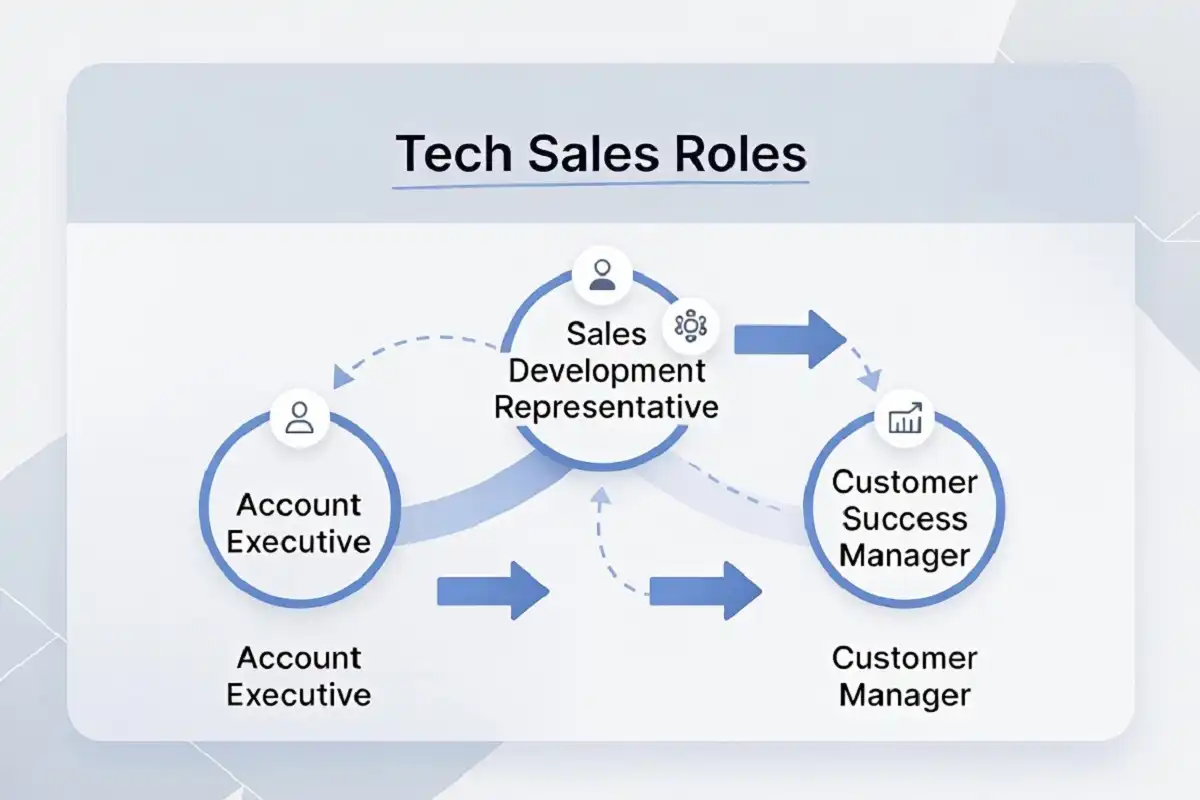
Sales Development Representative (SDR)
An SDR is usually the entry point into tech sales. Their main job is outreach: finding potential customers, sending emails, making calls, and booking meetings for senior sales staff. It is a high-activity role and is excellent for learning the basics of sales quickly.
Account Executive (AE)
An Account Executive takes those booked meetings and works to close deals. They present product demos, handle objections, negotiate pricing, and guide the customer through signing a contract. This role is where most of the commission earnings happen.
Customer Success Manager (CSM)
After a deal is closed, the Customer Success Manager steps in. Their job is to make sure clients actually use the product well, renew their contracts, and ideally expand to larger plans. Retention is just as important as new business in most tech companies.
Sales Engineer
For complex technical products, a Sales Engineer joins the process. They handle the deep technical questions, run custom demos, and act as the bridge between the sales team and the product or engineering team. This role suits people who enjoy both the technical and human sides of business.
Skills That Make a Strong Tech Sales Rep
Success in tech sales depends on a mix of soft skills and practical knowledge. Here are the most important ones:
- Active listening – Understanding what the customer actually needs, not just what you want to sell them.
- Clear communication – Being able to explain complex tech products in simple, relatable terms.
- Resilience – Rejection is a daily part of the job. Staying motivated after a “no” is essential.
- Curiosity about technology – You do not need to be a developer, but you do need to enjoy learning how products work.
- Organization and follow-through – Managing a busy pipeline without letting leads fall through the cracks.
- Empathy – Building genuine relationships with prospects and understanding the pressures they face.
Sales is ultimately a human activity. The best tech sales reps are not pushy; they are trusted advisors who help clients make good decisions. According to Salesforce’s State of Sales research, buyers are increasingly looking for sellers who understand their business, not just the product being pitched.
Tools Every Tech Sales Rep Should Know
Modern tech sales runs on a stack of digital tools. Getting familiar with these early gives you a real advantage:
- CRM software (like Salesforce or HubSpot) – Used to track deals, conversations, and pipeline stages.
- Email sequencing tools (like Outreach or Salesloft) – Help automate and personalize outreach at scale.
- LinkedIn Sales Navigator – A premium research tool for finding and engaging the right people at target companies.
- Video conferencing tools (like Zoom or Google Meet) – Most demos and discovery calls happen remotely.
- Call recording software (like Gong or Chorus) – Lets reps review their calls to spot patterns and improve.
Being comfortable with these tools is not just a bonus; most companies expect new hires to get up to speed on them quickly. If you enjoy exploring useful tech tools in general, check out this roundup of smart gadgets that upgrade daily life for a feel of how much practical technology has changed how professionals work.

The Tech Sales Process Step by Step
Most tech sales follow a similar process, regardless of what product is being sold. Understanding this process helps you know where you fit and how to move deals forward.
Step 1: Prospecting
This is the search for potential customers, also called “leads” or “prospects.” It involves researching companies, identifying decision-makers, and reaching out through email, phone, or LinkedIn.
Step 2: Discovery
Once you have a prospect’s attention, the discovery call is your chance to ask questions and truly understand their situation. What problems are they trying to solve? What have they tried before? What does success look like for them?
Step 3: Demo or Presentation
Based on what you learned in discovery, you show how your product addresses their specific needs. A good demo is tailored and conversational, not a one-size-fits-all slideshow.
Step 4: Handling Objections
Almost every deal faces resistance. Common objections include price, timing, competition, or internal approval processes. Knowing how to address these calmly and honestly is a core part of the job.
Step 5: Closing
Closing does not have to be a high-pressure moment. Good sales reps make it feel like a natural next step by summarizing value and making it easy to say yes.
Step 6: Handoff and Onboarding
After the deal is signed, the customer is passed to the Customer Success or onboarding team. A smooth handoff builds trust and sets the relationship up for long-term success.
How to Break Into Tech Sales
Many people who work in tech sales did not start there. Teachers, retail workers, marketers, and recent graduates all make it into the field. Here is what tends to help:
- Learn the basics of a popular CRM tool through free online training (Salesforce, HubSpot, and others offer free certification courses).
- Research the types of companies you want to sell for and understand their products deeply.
- Practice talking about technology in simple, benefit-focused language.
- Look for SDR or BDR (Business Development Representative) roles as a starting point.
- Consider a sales bootcamp if you want structured training and job placement support.
You can also learn a lot from the broader world of gadgets and technology trends. A resource like this dream gadgets wish list for tech fans gives a sense of what drives consumer excitement around technology, which is useful context when you are learning to communicate value.
For career development advice beyond just sales, the Harvard Business Review’s sales content is one of the most respected sources for thinking about strategy, relationships, and professional growth in sales roles.

Earnings and Career Progression
One of the most appealing things about tech sales is the earning potential. Most roles combine a base salary with variable commission pay tied to hitting targets. SDRs typically earn less than Account Executives, but the ceiling for top AEs at growing tech companies can be substantial.
Career paths in tech sales can go in several directions. You can move upward into team management or regional leadership. You can go deeper into a specialty like enterprise sales or technical consulting. Or you can move laterally into adjacent roles like sales operations, marketing, or product management.
What makes tech sales genuinely rewarding for many people is the combination of human interaction, learning new technologies regularly, and clear measurable outcomes. You always know whether you are doing well based on your numbers.
FAQs
Do you need a tech background to work in tech sales?
No, you do not need a technical degree or coding skills to succeed in tech sales. What matters more is a willingness to learn how products work and the ability to explain them clearly to potential customers. Many successful reps come from backgrounds in teaching, hospitality, retail, or communications.
What is the difference between inside sales and outside sales in tech?
Inside sales means you conduct all your work remotely, typically through calls, emails, and video meetings, without visiting clients in person. Outside sales involves traveling to meet prospects face-to-face. Most modern tech sales roles are inside sales, especially for SaaS companies where deals happen over video calls.
How long does it take to close a tech sales deal?
Sales cycle length depends on deal size and product complexity. Small SaaS tools sold to small businesses can close in days or weeks. Enterprise deals that involve large contracts and multiple decision-makers can take several months. Longer cycles require more patience, relationship-building, and consistent follow-up.
Is tech sales a stressful job?
Yes, tech sales can be stressful because performance is tied to hitting monthly or quarterly quotas. The work is competitive and rejection is common. However, many people find it energizing rather than draining, especially when they work for companies with good culture, realistic targets, and strong team support.
What is the best way to prepare for a tech sales interview?
Researching the company and its product thoroughly is the most important step. You should be able to explain what problem the product solves and who it is best suited for. Practicing a mock discovery call or role play exercise is also very helpful, as many interviewers will ask you to demo or pitch something on the spot.
Conclusion
Tech sales offers a unique blend of human connection, technology curiosity, and real earning potential. It is a field that rewards those who are willing to keep learning, stay resilient through rejection, and genuinely focus on helping customers succeed. Whether you are starting out as an SDR or aiming for a senior account executive role, the path forward is well-defined and the growth opportunities are real. With the right skills, tools, and mindset, tech sales can become a deeply satisfying long-term career.