
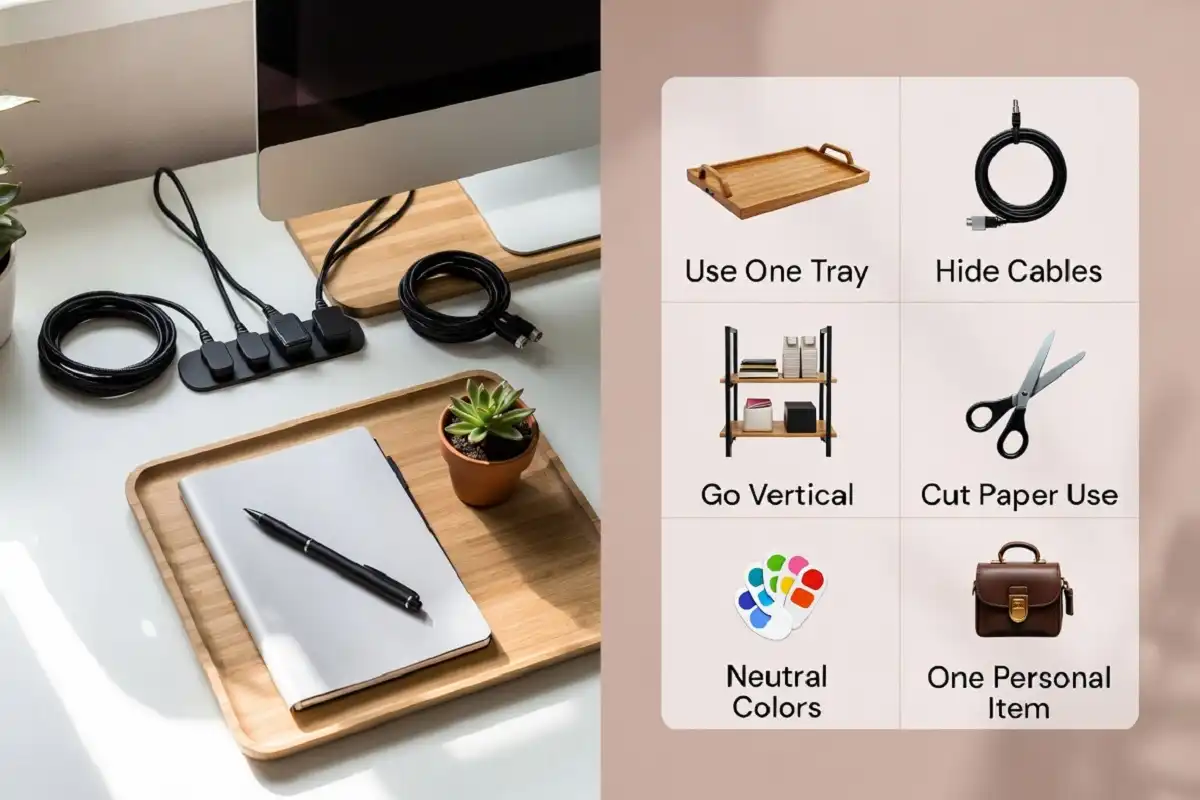
A cluttered desk often leads to a cluttered mind. If you spend hours working at a desk each day, small changes in how you organize it can make a big difference in focus and comfort. This guide shares practical minimalist desk organizer ideas that anyone can use, whether you work from home or in an office. You don’t need expensive gadgets or a full room makeover. Just a few thoughtful adjustments can turn a messy desk into a calm, functional workspace that supports better productivity.
Why a Minimalist Desk Setup Matters
A minimalist desk isn’t about owning fewer things for the sake of it. It’s about keeping only what you actually use, so your workspace supports your work instead of distracting from it.
Research on workplace environments has long shown that visual clutter can affect concentration and mental clarity. According to information available on Wikipedia, minimalism as a lifestyle approach emphasizes removing unnecessary elements to focus on what truly adds value. Applied to a desk, this means every item should have a clear purpose, which is the core idea behind most minimalist desk organizer ideas.
A clean desk also makes it easier to switch between tasks. Fewer objects mean fewer distractions, and that can help you stay on track during long work sessions.
Simple Minimalist Desk Organizer Ideas
1. Start With a Clear Surface Rule
Before adding any organizer, decide what actually needs to stay on your desk daily. A good rule is to keep only items you touch at least once a day within arm’s reach. Everything else can move to a drawer, shelf, or storage box nearby.
This single habit often solves half the clutter problem before you even buy an organizer.
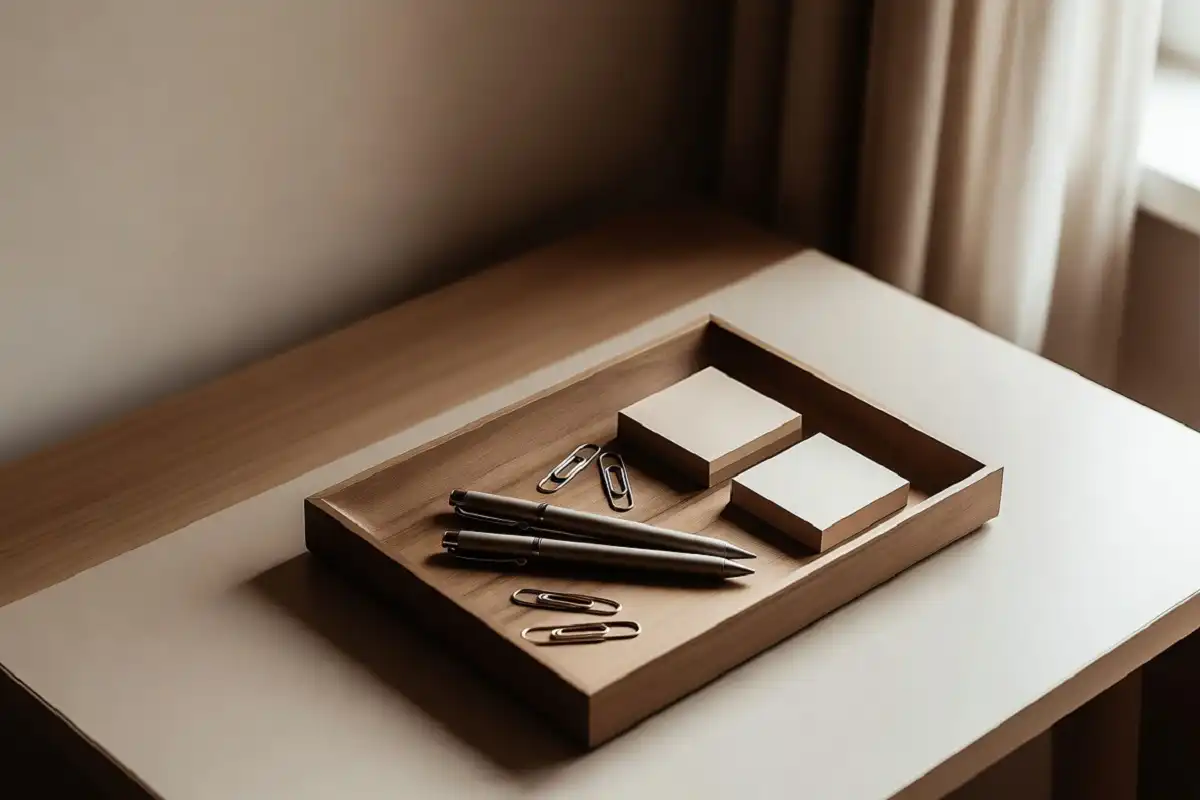
2. Use a Single Multi-Purpose Tray
Instead of scattering pens, sticky notes, and small tools across the desk, a single shallow tray can hold everything in one spot. Choose a tray made of wood, bamboo, or matte metal for a clean, neutral look that fits most workspace styles.
This approach keeps small items contained without adding visual noise.
3. Go Cable-Free With Simple Cable Management
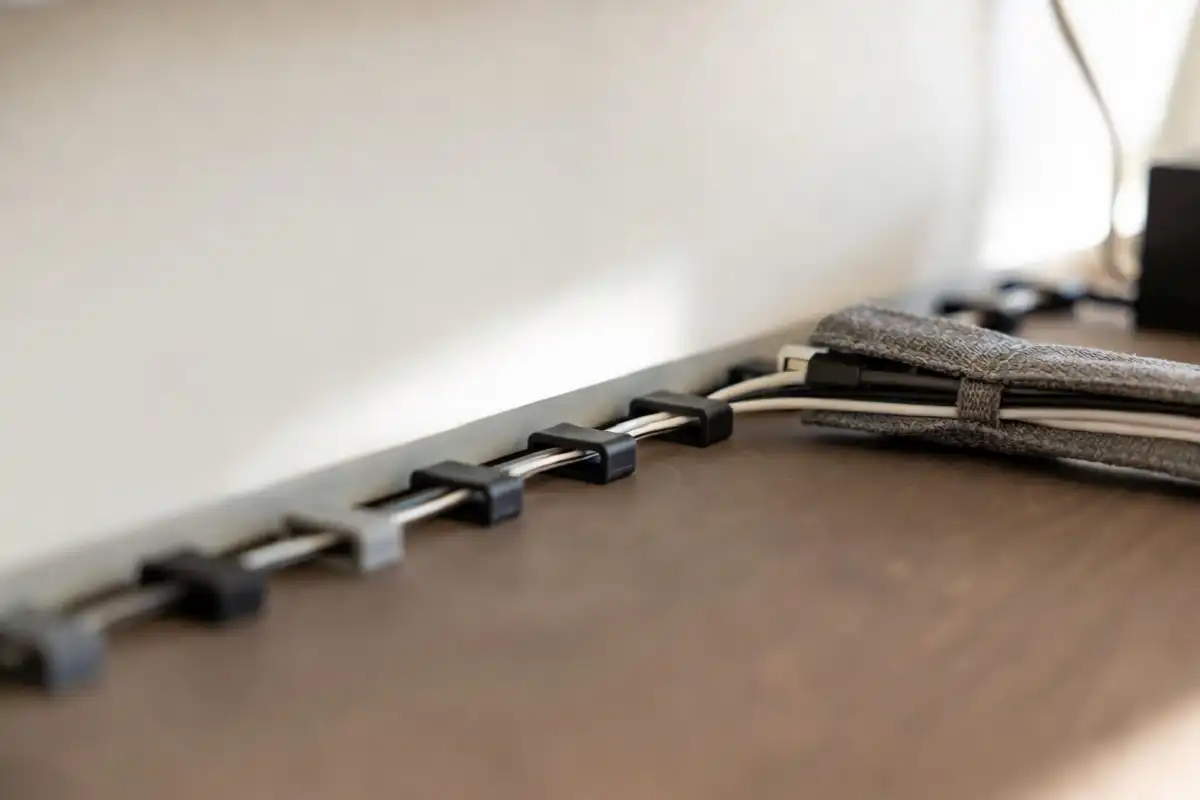
Tangled cables are one of the biggest culprits behind a messy-looking desk. Simple solutions include:
- Cable clips attached under the desk
- A cable sleeve to bundle multiple wires together
- A small cable box to hide power strips
If you use an e-ink tablet or similar device for note-taking, pairing it with an e-ink tablet with keyboard case can also reduce the number of separate accessories and cables you need on your desk.
4. Choose a Slim Monitor Stand With Storage
A monitor stand that raises your screen to eye level also creates hidden space underneath for a notebook, tablet, or small tray. This dual-purpose design is a favorite among minimalist setups because it adds function without taking up extra room.
5. Keep Paper Use to a Minimum
Paper is often the biggest source of desk clutter. Where possible, switch to digital notes. Many people now use e-ink tablets for reading and writing because they reduce paper use while keeping a natural writing feel. If you often annotate documents, an e-ink tablet for PDF annotation can replace stacks of printed pages with a single lightweight device.
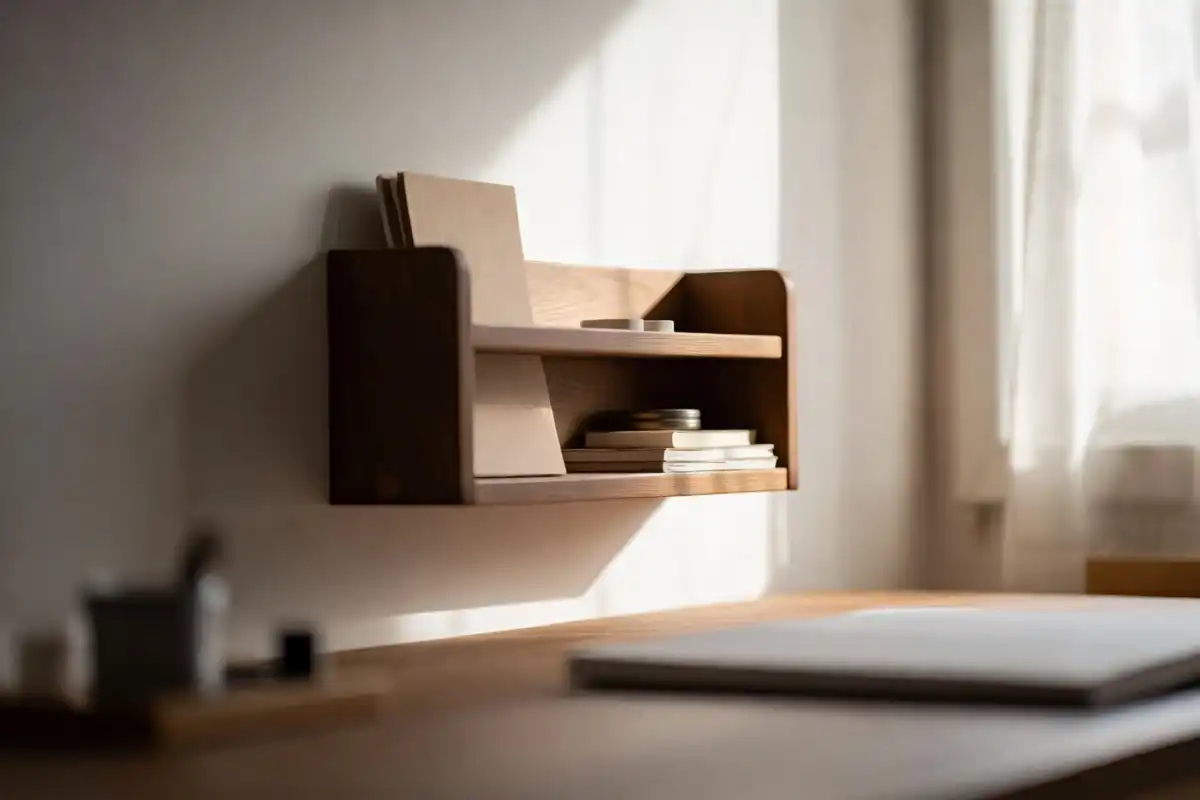
6. Use Vertical Space Instead of Desk Space
Wall-mounted shelves, pegboards, or magnetic strips let you store items above your desk instead of on it. This is especially useful in small home offices where desk space is limited.
Vertical storage works well for:
- Notebooks and folders
- Small stationery items
- Chargers and accessories
7. Pick a Neutral Color Palette
Visual clutter isn’t only about physical items. Too many colors and patterns on your desk accessories can make a space feel busy even when it’s technically tidy. Sticking to two or three neutral tones such as white, beige, or matte black creates a calmer visual effect.
8. Add One Small Personal Touch
Minimalism doesn’t mean removing all personality from your workspace. A single small plant, a framed photo, or one meaningful object can make the desk feel personal without adding clutter. The key is to limit it to one or two items rather than several.
These eight steps together form a practical set of minimalist desk organizer ideas that fit almost any workspace size or style.
Choosing the Right Organizer for Your Work Style
Not everyone needs the same setup. Someone who works mainly on a laptop will have different needs than someone who reads and annotates documents daily, so the best minimalist desk organizer ideas often depend on how you actually work.
If your work involves comparing digital devices or reading for long periods, it may help to understand the practical differences between device types. For example, comparing an e-ink tablet vs regular tablet can guide you toward a device that reduces eye strain and screen distractions, which indirectly supports a cleaner, more focused desk setup.
Battery life also matters if you rely on a device throughout the workday. Checking an e-ink tablet battery life comparison before choosing a device can help you avoid keeping extra chargers and cables on your desk.
Budget-Friendly Minimalist Organizer Options
You don’t need to spend a lot to create a clean desk setup. Some low-cost minimalist desk organizer ideas include:
- A simple pen holder made from recycled materials
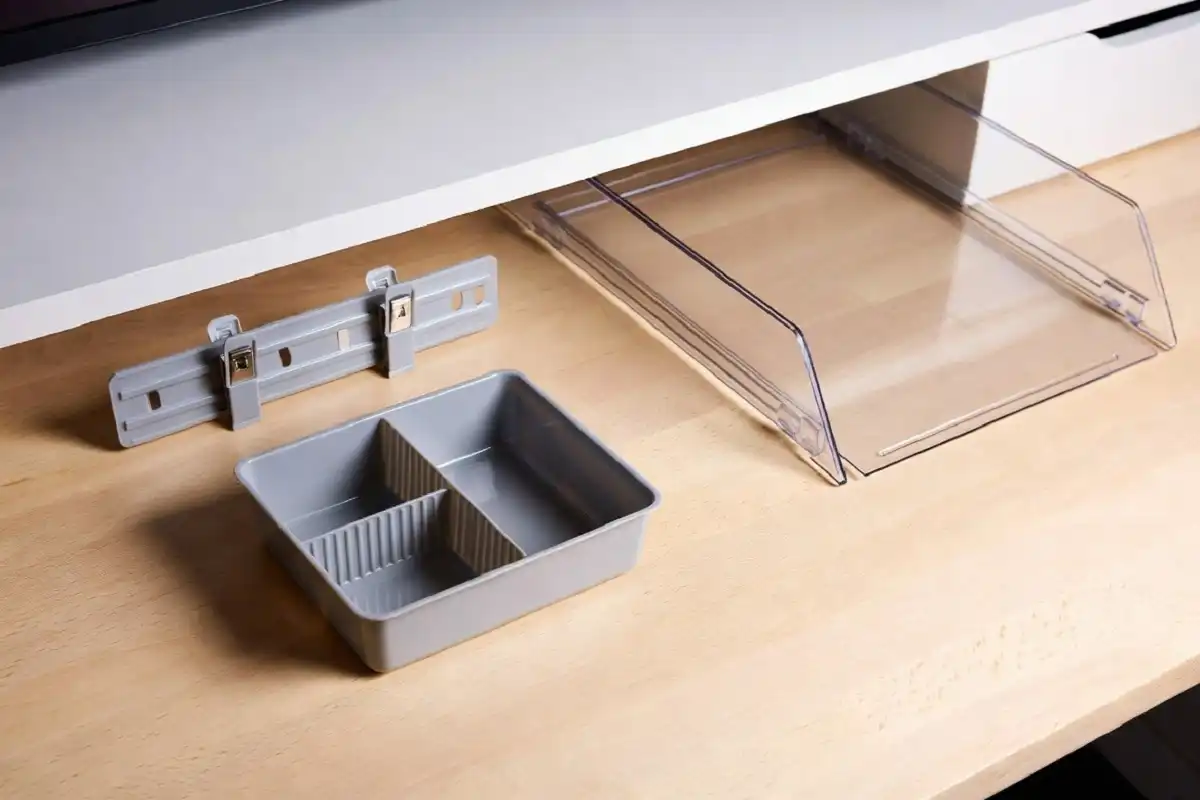
- A drawer divider tray for small office supplies
- A magnetic strip for holding metal tools like scissors or clips
- A foldable document tray for incoming and outgoing paperwork
These small additions are inexpensive but make a noticeable difference in daily organization.
Maintaining a Minimalist Desk Long-Term
Setting up a clean desk is only half the effort. Keeping it that way requires a simple daily habit.
At the end of each workday, spend two to three minutes putting items back in their designated spots. This short routine, sometimes referred to as a shutdown ritual in productivity discussions on platforms like HubSpot, helps prevent clutter from building up again the next day and keeps your minimalist desk organizer ideas working long term.
FAQs
What is a minimalist desk organizer?
A minimalist desk organizer is a simple storage solution, such as a tray, stand, or holder, designed to keep only essential items on your desk while reducing visual clutter. Most minimalist desk organizer ideas start with this basic concept.
How many items should be on a minimalist desk?
There’s no fixed number, but a good guideline is to keep only items you use daily within reach, storing everything else out of sight.
Do minimalist desk setups improve productivity?
Many people find that a clean desk helps them focus better, since fewer visual distractions make it easier to concentrate on one task at a time. This is one reason minimalist desk organizer ideas remain popular.
Is it expensive to create a minimalist desk?
No, most minimalist desk organizer ideas rely on simple, low-cost organizers rather than expensive furniture or gadgets.
Can digital tools help reduce desk clutter?
Yes, using digital note-taking devices instead of paper notebooks can significantly cut down on paper clutter and storage needs.
Conclusion
A minimalist desk doesn’t require a complete overhaul or costly furniture. Small, intentional changes, like using a single tray, managing cables, and reducing paper use, can transform a cluttered desk into a calm, functional space. These minimalist desk organizer ideas work because they focus on keeping only what supports your work and removing everything else. Trying even a few of these minimalist desk organizer ideas (19) can lead to a more focused, comfortable, and enjoyable work experience, whether you’re at home or in a shared office. Start small, stay consistent, and let your desk work for you, not against you.