
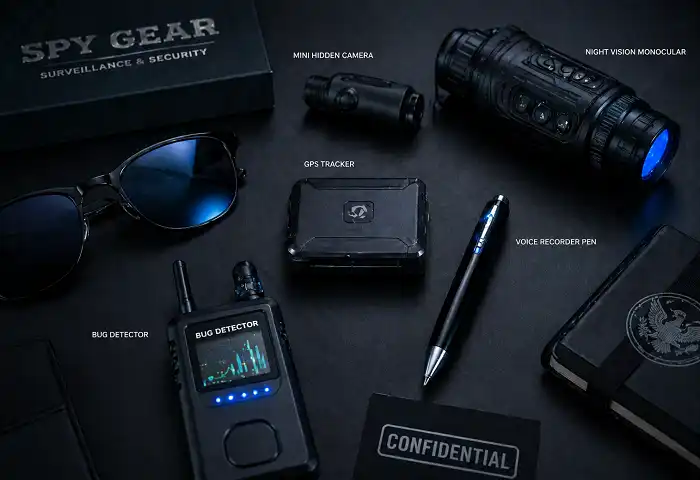
Introduction: Why Spy Gadgets Are No Longer Just for Secret Agents

There was a time when spy gadgets belonged exclusively to the pages of a James Bond novel or the silver screen of a Hollywood thriller. Sleek, mysterious, and impossibly advanced, these tools felt forever out of reach for ordinary people. Today, that reality has shifted dramatically. Thanks to rapid advances in miniaturization, wireless connectivity, and consumer electronics, spy gadgets have become widely accessible — and widely used — by everyday people all around the world.
Whether you are a concerned parent wanting to monitor a babysitter, a business owner protecting company assets, a homeowner strengthening security, or simply someone who values personal privacy, spy gadgets offer practical solutions that were once reserved for intelligence agencies and trained private investigators. The global market for surveillance technology has exploded in recent years, and understanding what is available — and how to use it responsibly — has never been more important.
This comprehensive guide walks you through everything you need to know: what spy gadgets are, how they work, which categories are most useful, what features to look for, and how to stay on the right side of the law while using them. By the end, you will have the knowledge to choose the right tools for your specific needs.
What Are Spy Gadgets?
At their core, spy gadgets are specialized devices designed to capture information — visual, audio, or location-based — without drawing attention to themselves. The defining characteristic of most spy gadgets is discretion. They are engineered to blend into everyday environments, look like ordinary household objects, or operate silently in the background without alerting anyone to their presence.
The category is broad. Spy gadgets range from miniature hidden cameras disguised as smoke detectors or alarm clocks, to sophisticated GPS trackers no larger than a matchbox, to voice-activated audio recorders and professional-grade bug detectors. Some are designed for gathering information, while others are defensive, helping users detect when they themselves are being monitored.
Modern spy gadgets have evolved well beyond simple recording devices. Many now connect to Wi-Fi networks, stream live footage to smartphones, send real-time location alerts, and store data securely in the cloud. The line between surveillance tools and smart home security has blurred considerably, with many consumers using both categories interchangeably to protect their homes and loved ones.
The Main Categories of Spy Gadgets
Understanding the landscape begins with knowing what categories exist. Each type serves a different purpose, and the right choice depends entirely on what you are trying to accomplish.
1. Hidden Cameras and Covert Video Surveillance
Hidden cameras are perhaps the most well-known type of spy gadgets. These tiny recording devices capture video footage without being noticed. They are embedded inside everyday objects — picture frames, wall clocks, smoke detectors, USB chargers, pens, and even eyeglasses — making them virtually impossible to detect with the naked eye.
Modern spy gadgets in this category come packed with impressive features. High-definition video resolution (1080p or 4K in premium models), wide-angle lenses, infrared night vision, and motion-triggered recording are now standard. Many models connect wirelessly to home networks, allowing users to view live footage on their smartphones from anywhere in the world.
Nanny cams are among the most popular choices for parents. Placed inside teddy bears, wall clocks, or potted plants, these spy gadgets give parents peace of mind when monitoring babysitters and household staff without alerting those being watched. Body-worn cameras disguised as shirt buttons, tie clips, or eyeglass frames allow wearers to record interactions discreetly — a tool increasingly used by journalists, professionals, and everyday individuals seeking personal protection.
2. GPS Trackers and Location Monitoring Devices
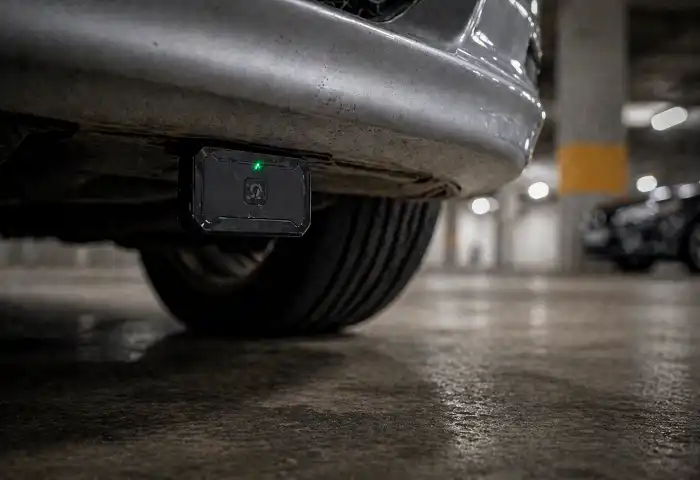
GPS trackers are among the most practically useful surveillance tools on the market today. These compact devices use the Global Positioning System to pinpoint their location with remarkable accuracy and transmit that data to a remote user via cellular or satellite signals.
The applications are extensive. Parents use GPS trackers to monitor teen drivers, fleet operators attach them to company vehicles, and individuals place them on elderly relatives with dementia to ensure their safety. Private investigators have long relied on GPS trackers as go-to spy gadgets for professional surveillance operations.
Consumer-grade devices have become remarkably sophisticated. Modern GPS trackers offer real-time location updates every few seconds, geofencing alerts when a vehicle or person crosses a defined boundary, historical route playback, long battery life of several weeks, and weatherproof designs for outdoor use. Some are hardwired permanently into vehicles, while others use magnetic housings that attach instantly to any metal surface.
3. Audio Recording Devices and Listening Tools
Audio spy gadgets capture sound rather than — or in addition to — video. These devices range from simple voice-activated digital recorders to directional microphones capable of picking up conversations from considerable distances.
Voice-activated recorders are some of the most discreet options available. They remain in standby mode, consuming minimal battery, until sound above a certain threshold activates recording automatically. Disguised as pens, USB drives, key fobs, or office accessories, these spy gadgets are practically invisible in professional environments.
Directional microphones, sometimes called parabolic microphones, amplify sounds from a specific direction while filtering ambient noise, allowing a user to listen in on or record conversations from tens or even hundreds of meters away. Telephone and call recorders occupy another niche — used to document verbal agreements, preserve interview recordings, or capture evidence in disputes where laws around consent permit their use.
4. Bug Detectors and Counter-Surveillance Devices

Not all spy gadgets are offensive tools. A significant and growing category focuses entirely on counter-surveillance: detecting when someone else is using hidden surveillance technology against you. Bug detectors are the primary defensive tool in this arsenal.
Professional-grade detectors scan radio frequencies used by wireless cameras and microphones, identify GSM signals from cellular-connected devices, detect magnetic fields emitted by electronic recording equipment, and locate hidden camera lenses using laser reflection technology. These spy gadgets are essential for business travelers in unfamiliar hotels, executives conducting sensitive meetings, and anyone who has genuine reason to believe their privacy has been compromised.
Radio frequency (RF) detectors are the most common variety. They sweep the electromagnetic spectrum for active transmission signals and alert users with beeps or indicator lights when a potential surveillance device is detected. Advanced models incorporate non-linear junction detectors (NLJDs) that can identify electronic components even when they are completely switched off and not transmitting.
5. Night Vision and Thermal Imaging Devices
Many surveillance situations unfold in darkness, which is why night vision technology forms an important pillar of the spy gadgets market. Night vision devices amplify ambient light — starlight, moonlight, or faint artificial sources — to produce a visible image in conditions where the human eye sees nothing at all.
Consumer night vision spy gadgets have become remarkably affordable. Binoculars, monoculars, and scope-mounted night vision devices are available across a wide range of price points. High-end models use image intensifier tubes comparable to those used by military forces, while more affordable digital night vision options perform well in most consumer scenarios.
Thermal imaging takes a different approach. Rather than amplifying visible light, these devices detect infrared radiation emitted by warm objects — including human bodies. Thermal cameras can see through complete darkness, light fog, and even some foliage, making them invaluable tools for perimeter security and professional surveillance work.
6. Smart Home Security Devices with Surveillance Capabilities
The boundary between smart home technology and spy gadgets has grown increasingly blurred. Video doorbells, indoor security cameras, and smart locks are sold openly in mainstream electronics stores — yet many function in ways that would have been considered advanced spy technology just a decade ago.
Smart video doorbells with wide-angle HD cameras, night vision, two-way audio, motion detection, and cloud recording are, in practical terms, sophisticated surveillance tools that homeowners install openly on their front porches. Indoor security cameras with remote viewing, AI-powered motion detection, and facial recognition similarly bridge the gap between consumer electronics and professional surveillance.
Key Features to Look for When Buying Spy Gadgets
If you are considering investing in surveillance equipment for personal use, several specifications separate high-quality spy gadgets from cheap, unreliable alternatives that will let you down precisely when you need them most.
Video Resolution: For hidden cameras, look for at least 1080p Full HD. Lower-resolution spy gadgets make it difficult to identify faces and fine details, which defeats the purpose entirely. Premium 4K cameras provide evidence-quality footage that holds up under scrutiny.
Battery Life: A GPS tracker or covert camera that requires daily charging is practically useless in the field. Seek spy gadgets with at least 24 hours of continuous recording life, or — for GPS trackers — several weeks of standby operation between charges.
Storage Capacity: How much data can the device hold locally? Many spy gadgets use removable microSD cards, which are convenient and easy to swap. Cloud-connected models offer expandable remote storage, though subscription fees typically apply.
Night Vision Range: For cameras intended for low-light use, verify the advertised infrared range. Quality spy gadgets should achieve at least 10–15 meters of useful night vision; professional-grade devices can reach 30 meters or beyond.
Wireless Connectivity: Wi-Fi enabled spy gadgets support remote monitoring and live streaming to your smartphone. Look for dual-band devices supporting both 2.4GHz and 5GHz networks for improved reliability and reduced lag.
Motion Detection and AI: The best spy gadgets let you fine-tune motion sensitivity to minimize false alerts while capturing genuine activity. AI-powered models can distinguish between human beings, animals, and moving vehicles — a significant practical advantage.
Weatherproofing: Any outdoor surveillance equipment should carry at minimum an IP65 water resistance rating. For harsher environments, IP67 or IP68-rated spy gadgets provide the durability needed for long-term outdoor deployment.
Legal Considerations When Using Spy Gadgets
This is the most critical section of this guide. Spy gadgets operate within a complex legal framework that varies significantly between countries and, within the United States, between individual states. Using these tools irresponsibly — or without understanding the law — can result in serious criminal charges, significant civil liability, and lasting reputational damage.
Common legal principles shared across most jurisdictions:
Recording in spaces where individuals have a reasonable expectation of privacy without their consent is typically illegal. This includes bathrooms, changing rooms, bedrooms, and private offices. Placing hidden cameras in these locations — even on property you own — can constitute a serious criminal offense.
In many places, recording a private conversation without the consent of at least one party is a criminal act. Audio spy gadgets, in particular, must be used with full awareness of local wiretapping and eavesdropping laws. In two-party consent states and countries, all participants in a conversation must agree to being recorded.
GPS tracking of a vehicle you do not legally own, or attaching a tracker to another person without their knowledge, is illegal in most jurisdictions without proper legal authority.
Legitimate and clearly legal uses include:
Monitoring your own home, including with hidden cameras placed in common areas. Using GPS trackers on vehicles registered in your name. Recording conversations in which you yourself are a participant, in one-party consent jurisdictions. Installing visible or disclosed cameras with posted notice in retail environments for loss prevention purposes.
Always research the specific laws in your country, state, and municipality before deploying surveillance technology of any kind. When in doubt, consult a qualified legal professional.
The Best Spy Gadgets for Home Security
For homeowners, surveillance tools can form a robust, layered security system that both deters intruders and provides valuable evidence in the event of a crime.
A well-designed home security setup might combine a video doorbell at the front entrance for real-time monitoring of arrivals, indoor cameras covering living areas, outdoor weatherproof cameras covering driveways and garden access points, and a GPS tracker on each family vehicle. Periodic bug detector sweeps of home office spaces ensure that confidential conversations remain private from any third party who might have planted listening devices.
Integrating spy gadgets with a central smart home hub — such as Google Home or Amazon Alexa — allows for unified alerts, automated responses, and remote monitoring from a single smartphone application. This level of integration transforms individual devices into a coordinated, intelligent security ecosystem.
Spy Gadgets for Personal Safety and Protection
Beyond home security, surveillance tools serve an important personal protection function. Body cameras provide a discreet way to document interactions with employers, authorities, or other individuals where disputes may later arise. Evidence captured by wearable cameras has proven decisive in legal proceedings, workplace harassment complaints, and personal injury claims around the world.
Personal GPS trackers small enough to slip into a pocket or clip to a bag allow trusted contacts to monitor your location in real time. These spy gadgets are particularly valuable for solo travelers in unfamiliar locations, outdoor adventurers in remote areas, and individuals in vulnerable domestic situations who need a discreet way to communicate their whereabouts to helpers.
Audio recorders disguised as pens or USB drives allow professionals to document verbal agreements, record admissions, and preserve important conversations — provided local law permits recording without all-party consent.
The Future of Spy Gadgets
The surveillance technology industry is evolving rapidly, driven by artificial intelligence, sensor miniaturization, and next-generation wireless communication. Several trends will define what spy gadgets look like in the years ahead.
AI-powered analysis will allow cameras and audio devices to automatically flag suspicious behavior, identify specific individuals, read license plates, and generate intelligent event summaries — reducing the cognitive burden on the human operator significantly.
Drone-based surveillance, already essential for professional investigators and law enforcement agencies, is reaching consumer price points. Small, quiet drones equipped with high-resolution cameras are increasingly capable spy gadgets that can monitor large areas quickly and flexibly.
As 5G networks reach near-universal coverage, cloud-connected spy gadgets will stream higher-resolution footage, process complex AI analytics on remote servers in real time, and deliver users unprecedented situational awareness from wherever they happen to be.
Augmented reality integration will allow users to overlay surveillance data onto live camera views — tagging persons of interest, tracking multiple subjects simultaneously, and visualizing GPS data plotted directly onto real-world imagery.
Conclusion: Making Smart Choices with Spy Gadgets
Spy gadgets have made a remarkable journey from the exclusive domain of intelligence agencies and thriller fiction into practical, accessible tools that serve genuine protective and investigative purposes for ordinary people. From hidden cameras and GPS trackers to bug detectors and night vision devices, today’s spy gadgets are more capable, more affordable, and more available than at any point in history.
The key to using them responsibly lies in three things: clearly understanding your legitimate needs, selecting devices with the right specifications for those needs, and staying fully informed about the legal framework governing surveillance in your specific location. Used ethically and lawfully, these surveillance tools can provide genuine security, peace of mind, and meaningful protection for you, your family, and your most valuable assets.
Whether you are exploring spy gadgets for the first time or upgrading an existing surveillance setup, take the time to compare specifications carefully, read verified user reviews, and above all, deploy every tool you choose with responsibility and respect for the privacy of others.