
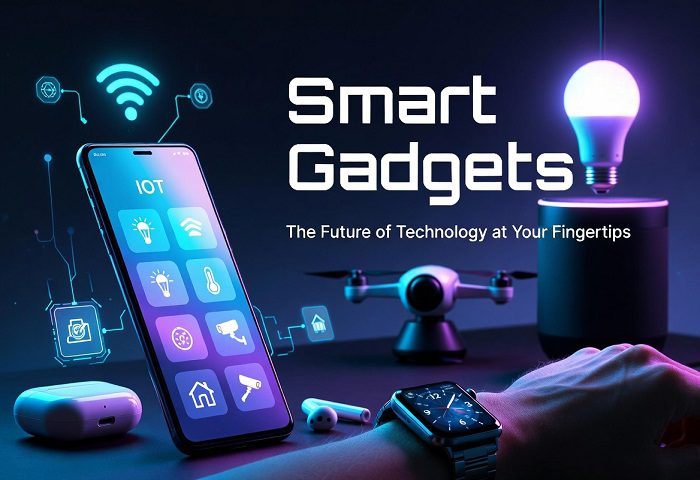
Introduction: The Age of Smart Living
Think about the last time you walked into your home and the lights turned on automatically, your favourite playlist started playing, and the thermostat adjusted itself to the perfect temperature — all before you even set down your bags. That seamless, almost magical experience is no longer the stuff of science fiction. It is your everyday reality, powered entirely by smart gadgets.
We live in a world that is more connected than at any other point in human history. In 2025, the global market for smart gadgets and Internet of Things (IoT) devices is expected to surpass $1.3 trillion, and the growth shows absolutely no sign of slowing down. Whether you are a tech enthusiast who has been following every product release, or someone who just wants to make daily life a little more convenient, these connected devices have something meaningful to offer you.
This guide is designed to be your definitive resource. We will walk through the best categories of smart gadgets available today, explain what makes each one worth your hard-earned money, and help you figure out exactly which connected devices deserve a place in your home, on your wrist, or in your pocket.
What Exactly Are Smart Gadgets?
Before we dive into specific products and recommendations, it is worth taking a moment to define what we actually mean when we talk about smart gadgets. The term gets thrown around a lot, and it can sometimes feel like a marketing buzzword slapped on anything with a Bluetooth chip. But there is a real, meaningful distinction between a standard electronic device and a genuinely smart one.
At their core, smart gadgets are electronic devices that can connect to the internet or to other devices, collect data from their environment, and use that data to perform actions or provide insights — often with little to no direct input from the user. They are the backbone of the broader concept of the Internet of Things (IoT), where everyday physical objects are embedded with sensors, software, and connectivity features that allow them to communicate and cooperate.
A traditional light bulb turns on when you flip a switch. A smart light bulb can be scheduled, dimmed, colour-changed, and controlled remotely from anywhere in the world through a smartphone app or a voice assistant like Amazon Alexa or Google Assistant. A conventional thermostat heats your home at a fixed setting. A smart thermostat learns your schedule, monitors outdoor weather, and adjusts itself automatically to keep you comfortable while cutting down on energy waste. That is the fundamental difference — and it is a significant one.
Smart gadgets are internet-connected devices that collect data, automate actions, and communicate with other devices or apps to make everyday tasks more convenient, efficient, and personalised.
Why Smart Gadgets Matter More Than Ever in 2025
Every year, technology journalists write pieces declaring that “this is the year smart home technology finally goes mainstream.” For much of the past decade, that claim felt premature. Early smart home devices were expensive, difficult to set up, and often required all your gadgets to be from the same manufacturer to work together. That frustration was real, and it held a lot of people back.
But 2025 is genuinely different, and here is why: the Matter standard — a universal smart home connectivity protocol backed by Apple, Google, Amazon, and Samsung — has now been fully adopted across thousands of devices. For the first time, your smart light from one brand can communicate perfectly with your smart speaker from another, your smart security camera from a third, and your smart lock from a fourth. The ecosystem is finally open.
Beyond interoperability, artificial intelligence has transformed what smart gadgets can actually do. Modern AI-powered devices do not just follow instructions — they anticipate your needs. Your smart thermostat does not just respond to a schedule you programmed. It watches your patterns over weeks, learns your preferences, and starts making adjustments on its own. Your smart refrigerator does not just cool your food. It tracks what is inside, alerts you when something is about to expire, and suggests recipes based on what you have available.
“The home of 2025 does not just shelter you from the elements — it actively works to improve your quality of life every single day.”
Energy efficiency is another huge reason why investing in smart gadgets makes financial sense. Smart plugs, smart thermostats, and smart lighting systems collectively help the average household reduce its energy consumption by up to 23 percent annually. In an era of rising utility costs, that is a compelling return on investment that pays back the purchase price within months, not years.
Best Smart Gadgets for Your Home
Your home is where you spend the majority of your time, which makes it the most natural starting point when building out your collection of smart gadgets. Home automation technology has exploded in recent years, giving everyday people access to tools that were once found only in luxury properties or corporate office buildings.
Smart Speakers and Smart Displays
If you are brand new to the world of smart gadgets, a smart speaker is almost always the best first purchase. Devices like the Amazon Echo, Google Nest Audio, and Apple HomePod Mini serve as the central hub for your entire smart home ecosystem. They respond to voice commands, play music, answer questions, control other connected devices, set reminders, and manage shopping lists — all hands-free.
Smart displays take this one step further by adding a touchscreen to the equation. The Amazon Echo Show and Google Nest Hub are the two market leaders, and both are genuinely impressive pieces of kit. You can use them to make video calls, watch YouTube, view your smart security camera feeds, follow along with recipe videos in the kitchen, and get a visual weather forecast with a single glance. As a control panel for all your other connected devices, a smart display is hard to beat.
Smart Lighting Systems
Smart lighting is one of the most satisfying categories of smart gadgets to invest in, because the results are immediately visible and the range of personalisation is enormous. Brands like Philips Hue, LIFX, and Govee offer smart bulbs that can produce millions of colours, adjust their brightness and warmth automatically based on the time of day, and sync with your TV or music for immersive entertainment experiences.
From a practical standpoint, smart lighting can simulate occupancy when you are away from home to deter intruders, gradually brighten each morning to serve as a natural alarm clock, and automatically switch off when everyone has left the house. These are not gimmicks — they are genuinely useful features that you will end up relying on every single day.
Smart Thermostats
The Nest Learning Thermostat and the Ecobee SmartThermostat Premium are the two most talked-about smart thermostats on the market, and both deserve their reputations. These AI-powered devices learn your heating and cooling preferences over time, factor in external weather conditions, and can even detect when the house is empty and reduce energy usage accordingly.
Amazon Echo Show 10
Motorised display that tracks you across the room. Perfect home automation hub for all your connected devices.
Philips Hue Starter Kit
Millions of colours, sunrise alarms, and full Matter support. The gold standard in smart lighting systems.
Nest Learning Thermostat
Learns your schedule in a week and can cut energy bills by up to 23%. The smartest thermostat available.
Arlo Pro 5S Camera
4K video, colour night vision, and AI-powered person detection. Ideal for home security.
Smart Security Cameras and Doorbells
Home security is one area where smart gadgets have delivered a truly transformative improvement over traditional alternatives. Video doorbells like the Ring Video Doorbell and Nest Doorbell allow you to see, hear, and speak to anyone at your front door from anywhere in the world using just your smartphone. Smart security cameras from brands like Arlo, Eufy, and Reolink offer AI-powered motion detection that can distinguish between a person, a vehicle, and an animal — cutting down on false alarms significantly.
Studies show that people who use wearable fitness trackers walk an average of 40 minutes more per day than those who do not, and are 27% more likely to meet their weekly exercise goals consistently.
Smart Scales and Health Monitors
Smart bathroom scales from brands like Withings and Eufy go far beyond simply measuring your body weight. These clever devices use bioelectrical impedance analysis to measure body fat percentage, muscle mass, bone density, hydration levels, and even visceral fat — all within seconds of stepping on the scale. The data syncs automatically to your smartphone, where sophisticated apps track your progress over time and provide personalised insights and recommendations.
Smart Gadgets for Productivity and Work
The modern workplace — whether that is a dedicated home office, a co-working space, or a hybrid arrangement — has been transformed by a new generation of intelligent, connected productivity tools. They are designed to eliminate friction, reduce cognitive load, and help you get more done in less time without burning out.
True Wireless Earbuds with Active Noise Cancellation
The Apple AirPods Pro 2, Sony WF-1000XM5, and Bose QuietComfort Earbuds II are among the most productivity-enhancing devices you can own. Their active noise cancellation technology creates a bubble of silence around you, allowing you to concentrate deeply in open-plan offices, busy coffee shops, or noisy households. Transparency mode lets important sounds through when you need to stay aware of your surroundings, and voice assistant integration means you can answer calls, skip tracks, and manage your schedule entirely hands-free.
Smart Pens and Digital Note-Taking
For professionals and students who prefer writing by hand but need the flexibility of digital storage, smart pens like the Livescribe Symphony and the Moleskine Pen+ Ellipse are remarkable productivity tools. They record everything you write on paper and instantly convert your handwriting to searchable digital text, sync your notes to cloud services, and even record audio that is automatically linked to what you were writing at each specific moment. It is the best of both analogue and digital worlds in a single elegant device.
Smart Monitors and Docking Stations
Smart monitors from Samsung, LG, and Dell now come with built-in webcams, ambient light sensors that automatically adjust screen brightness, and even AI-powered eye care technology that monitors your viewing habits and recommends breaks to reduce eye strain. Combined with intelligent wireless docking stations that recognise your device and configure your entire workspace setup in seconds, these connected devices make hot-desking and remote work dramatically more comfortable and efficient.
| Smart Gadget | Best For | Price Range | Smart Home Compatible |
|---|---|---|---|
| Apple Watch Series 10 | Health monitoring, iOS users | $399 – $799 | ✓ Yes (HomeKit) |
| Amazon Echo Show 10 | Home hub, kitchen, families | $249 | ✓ Yes (Alexa / Matter) |
| Nest Learning Thermostat | Energy saving, automation | $179 – $249 | ✓ Yes (Google Home) |
| Philips Hue Starter Kit | Lighting, ambience, scenes | $99 – $199 | ✓ Yes (Matter / all platforms) |
| Ring Video Doorbell 4 | Security, deliveries, access | $99 – $199 | ✓ Yes (Alexa / Matter) |
| Withings Body Comp Scale | Health tracking, body metrics | $199 | Limited (Health apps only) |
Smart Gadgets for Entertainment
Entertainment is the category where smart gadgets have arguably had their greatest consumer impact. The way we watch, listen, play, and interact with media has been fundamentally transformed by connected technology over the past decade, and the pace of innovation shows absolutely no sign of slowing down.
Streaming sticks and smart TV boxes like the Amazon Fire TV Stick 4K Max, the Google Chromecast with Google TV, and the Apple TV 4K give any television — even older models — access to every major streaming platform, voice search, and smart home controls. Pair one of these affordable streaming devices with a decent soundbar from Sonos or LG, and you have a home cinema setup that rivals what was previously available only in dedicated screening rooms.
Smart projectors represent one of the most exciting emerging categories in the entertainment tech space. Devices like the Xgimi Horizon Pro and the Dangbei Mars Pro can project a cinema-quality 4K image onto any white wall, run Android TV natively, and even include built-in smart speakers. They transform any room into an immersive viewing environment in minutes, then fold back away when you are finished.
For gaming enthusiasts, the integration of connected technology into the gaming ecosystem has opened up possibilities that were previously unimaginable. Smart LED strips and ambient lighting systems that sync in real time with game action, smart chairs that vibrate with in-game events, and wireless headsets with AI-powered noise cancellation and spatial audio all contribute to a level of immersion that makes next-generation gaming genuinely feel like a different medium.
How to Choose the Right Smart Gadgets
With so many smart gadgets on the market, it can quickly feel overwhelming to figure out where to start or what to prioritise. These practical guidelines will help you make decisions that you will be happy with for the long term rather than ending up with a drawer full of devices you never actually use.
Start With the Problem, Not the Product
The most common mistake people make when shopping for connected devices is starting with a product and then trying to justify buying it. Instead, start with a genuine pain point in your daily life. Are your energy bills too high? A smart thermostat and smart power strips are the right place to start. Do you struggle with home security concerns when you travel? Smart cameras and a video doorbell will address that directly. Are you trying to build better sleep habits? A smart sleep tracker and smart lighting with a circadian rhythm program are your best tools.
- Define the specific problem you are trying to solve before browsing products
- Check compatibility with your existing smartphone ecosystem (iOS or Android)
- Look for Matter or Thread certification to ensure long-term interoperability
- Research the manufacturer’s track record for software support and security updates
- Read recent user reviews that specifically mention real-world reliability
- Consider the ongoing costs: subscriptions, replacement parts, and cloud storage fees
- Start small with one or two smart gadgets before committing to a full ecosystem
Consider the Ecosystem Before You Buy
One of the most important strategic decisions you will make when building a collection of smart gadgets is choosing your primary smart home platform. Amazon Alexa, Google Home, and Apple HomeKit are the three dominant ecosystems, and while the Matter standard has significantly improved cross-platform compatibility, each still has its own strengths and weaknesses.
Amazon Alexa offers the widest range of compatible devices and the most developed third-party skill integrations. Google Home offers the most powerful AI and the tightest integration with Android smartphones and Google services. Apple HomeKit offers the strongest privacy protections and the most seamless experience for households full of Apple devices. Think about which platform aligns most naturally with the technology you already use, and build your ecosystem around that decision.
Always change the default passwords on your devices immediately after setup, enable two-factor authentication wherever it is available, and keep all device firmware updated regularly. Connected devices that are left unpatched are a common vector for home network security breaches.
The Future of Smart Gadgets
If the smart gadgets of 2025 already feel impressive, the near future promises developments that will make today’s technology look like a rough early draft. Several technological trends are converging to create a next generation of intelligent, connected devices that will be fundamentally more capable, more intuitive, and more deeply integrated into every aspect of daily life.
Ambient computing is one of the most transformative concepts shaping the future of smart gadgets. Rather than interacting with discrete devices through screens and buttons, ambient computing envisions a world where intelligence is woven into the very fabric of your environment — in the walls, the furniture, the clothing you wear, and the surfaces you touch. Your home will not just respond to commands. It will understand your mood from your voice and posture, anticipate your needs before you consciously articulate them, and seamlessly coordinate dozens of connected devices in the background without requiring any attention from you at all.
Advances in on-device artificial intelligence — where AI processing happens locally on the device rather than in the cloud — will make smart gadgets faster, more private, and functional even without an internet connection. This is a significant development for users who have been hesitant to adopt connected devices due to legitimate privacy concerns about their data being transmitted to and stored on remote servers.
Health monitoring will continue to be one of the most rapidly evolving categories within the broader smart gadgets market. Researchers are actively developing wearable sensors that can continuously monitor blood glucose levels non-invasively (without requiring needles or test strips), detect early biomarkers of conditions like Parkinson’s disease and atrial fibrillation, measure cortisol levels as an indicator of chronic stress, and even perform preliminary skin cancer screening. These capabilities could genuinely save millions of lives by enabling early detection of serious conditions that are currently missed until they become much harder to treat.
Conclusion
We have covered a lot of ground in this guide, and if there is one central idea to take away, it is this: smart gadgets are no longer a luxury for early adopters and technology enthusiasts. They are practical, accessible, and increasingly affordable tools that can meaningfully improve the quality of your everyday life — provided you choose them thoughtfully and use them with intention.
The best smart gadgets are not the ones with the most features or the highest price tags. They are the ones that solve real problems in your life, fit naturally into your existing routines, and work reliably day after day without demanding your constant attention. Start with one or two that address your most pressing needs, learn how to get the most out of them, and build from there.
The smart home revolution is not a distant future promise. It is happening right now, in homes and offices and on wrists all around the world. The only question remaining is: which smart gadgets are going to become indispensable parts of your life next?
Whether you begin with a smart speaker, a fitness tracker, or a smart thermostat, the most important step is simply getting started. Every smart home begins with a single connected device — and from there, the possibilities are genuinely limitless.